How to port a game to console
Audit architecture, controls, performance, services, testing and release dependencies before committing.
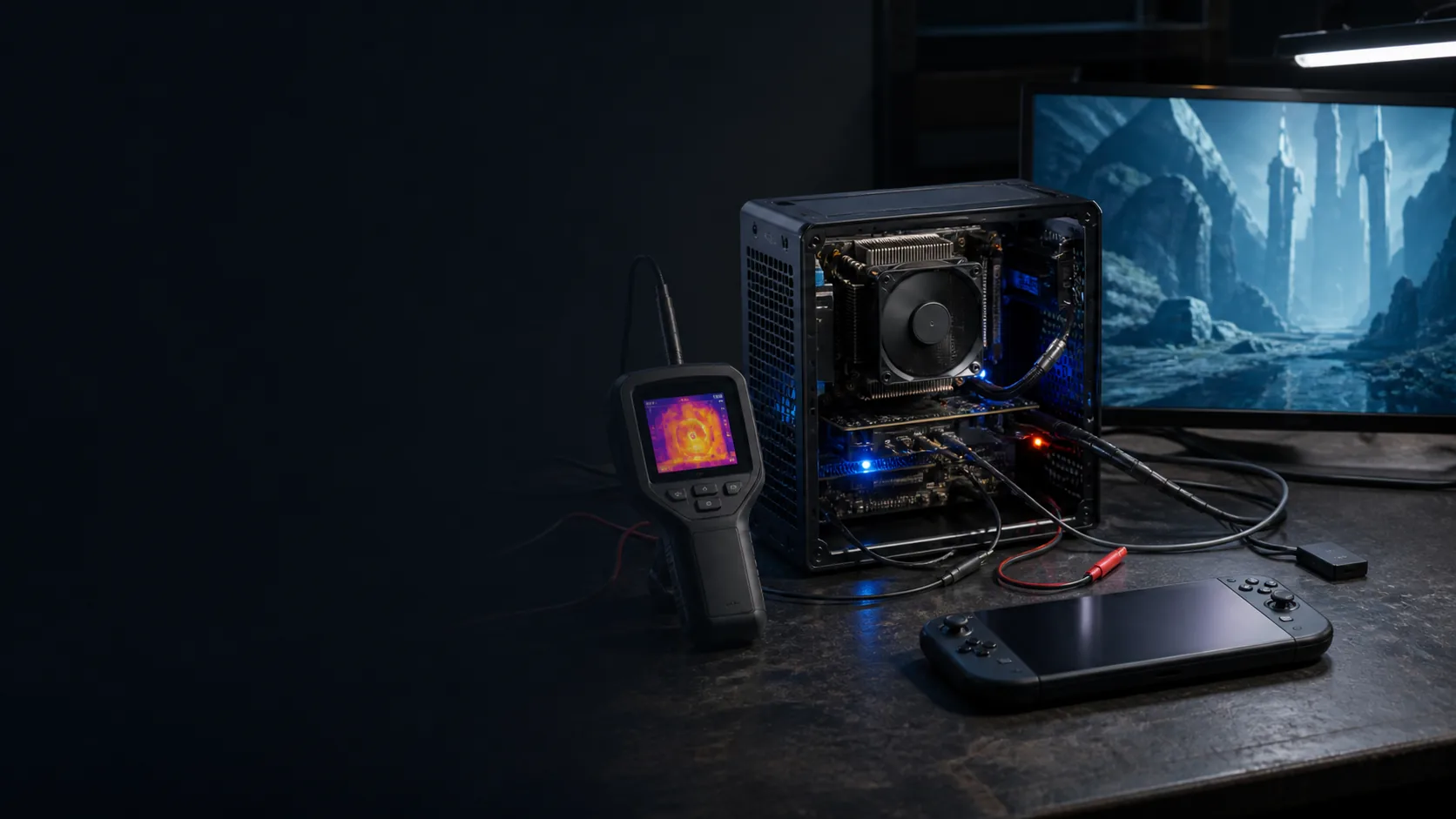
Target performance profilingRepresentative editorial scene — not Kioto Gaming staff, premises or client work.
Platform adaptation and performance
Adapt the experience, systems and performance profile for a new release target with measurable proof.
Discuss this scopeProduction question / 01
A game port is a product adaptation as well as an engineering project. The first assessment covers build health, dependencies, input, UI, save data, performance, memory, content assumptions and platform systems. That evidence becomes a port plan with explicit risks, proof points and acceptance criteria.
See how the scope is builtPlatform differences appear far beyond rendering. Control conventions, safe areas, suspend and resume behaviour, storage, achievements, networking, entitlement, text scale and performance budgets can all change the player experience. The assessment identifies what translates directly and what needs deliberate adaptation.
Optimization follows measurement. Representative scenes and target conditions reveal whether the limiting factor is CPU, GPU, memory, streaming, content setup or work inside a specific system. Every change is compared against image quality and gameplay behaviour so a faster build does not quietly become a different product.
Release preparation keeps engineering connected to verification. Requirements, configuration, test scope, known issues and submission dependencies are assembled into a shared readiness view. The final hand-off records platform-specific decisions and the maintenance implications for the team that owns the port after launch.
Target platforms and specialist coverage are confirmed after technical assessment. The page does not imply certification or access that has not been verified.
Code, middleware, plugins, content, build health, platform services and release assumptions are reviewed to identify blockers and proof work before a full commitment.
Input conventions, prompts, navigation, safe areas, text scale and platform-specific player flows are treated as product work, not a final compatibility pass.
Profiling uses representative scenes, hardware and capture conditions. CPU, GPU, memory, streaming and content changes are tracked against visual and gameplay acceptance criteria.
Configuration, requirement coverage, regression scope, known issues and submission dependencies are organized for the project owner and relevant release stakeholders.
The target name is only the start. Access, representative proof and release ownership determine whether the plan is credible.
Hardware, operating conditions, platform services, middleware rights, source access and release region assumptions are written into the assessment. Any unverified dependency is marked as a risk rather than presented as covered.
The first target build should include a meaningful player path and difficult scene conditions. Performance, memory, controls, UI and service proof criteria show what the build must demonstrate before the full backlog is accepted.
The proposal identifies who owns platform accounts, requirement interpretation, store materials, test environments, submission, responses and final release authority. Support work does not transfer approval from the relevant platform holder.
A port plan should show feasibility, adaptation work, measured performance and remaining release risk.
The first goal is to replace assumptions with target-build evidence before schedule and budget become fixed.
Step 01
Build health, architecture, dependencies, middleware, content, input, UI, save data, networking and release assumptions are inspected.
Step 02
A representative scene and player path expose platform, performance and integration blockers before the full backlog is committed.
Step 03
Controls, UI, services, storage and lifecycle behaviour are implemented against explicit experience and technical criteria.
Step 04
Measured bottlenecks are addressed in representative conditions, then checked against gameplay, visuals and previously accepted behaviour.
Step 05
Requirement evidence, configuration, known issues, test status and platform-specific maintenance decisions are transferred to the release owner.
The largest unknowns often sit in dependencies, target conditions and platform ownership rather than visible rendering work.
A compatible engine version does not prove that every plugin, SDK, backend or licensed component supports the target. Rights and technical paths need separate verification.
An easy scene can produce a misleading frame rate. The target proof should include representative streaming, effects, AI, UI and player behaviour under named capture conditions.
A faster build is not automatically an accepted port. Visual, control and gameplay criteria protect the product while code, content and configuration change.
A measured proof can prevent a public platform promise from hardening before the technical path is known.
These answers separate a responsible port plan from a platform name added to the release list.
It should inspect source access, build health, engine and plugins, middleware rights, content assumptions, controls, UI, platform services, memory, performance, testing and release dependencies for the exact target.
A planning range can be built from known conditions, but a proof build usually provides stronger evidence. The estimate should name assumptions, exclusions, target conditions and the risks that could move the range.
Optimization can involve code, rendering, memory, streaming, data, assets or scene setup. The relevant work is identified through profiling, then checked against visual quality and gameplay behaviour.
No. Platform scope, access, services, release responsibilities and specialist needs must be stated explicitly. Requirement support does not replace review by the platform holder or guarantee approval.
We will identify the first feasibility proof, the main adaptation risks and the evidence required for a responsible port plan.