Second Sentinel Silksong: how much is actually confirmed
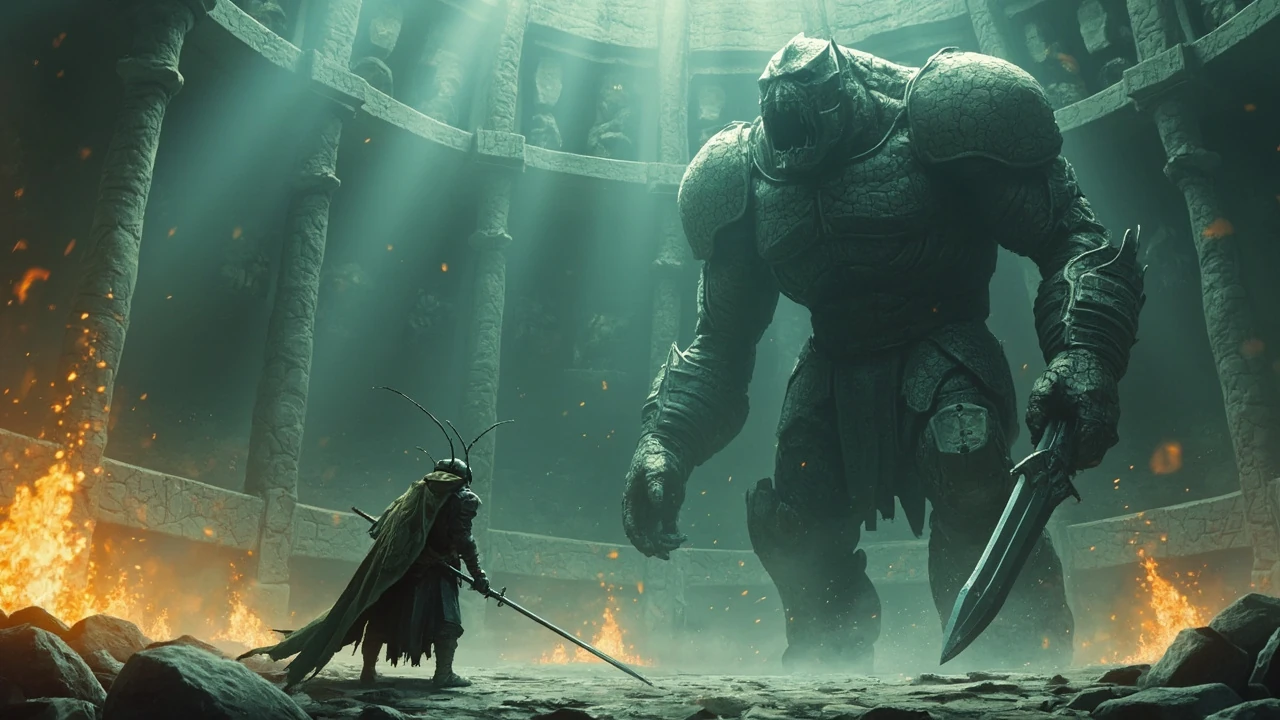
The phrase “second sentinel silksong” has been circulating in fan wikis, Reddit threads, and Discord screenshots for years. It points to a recurring boss archetype inside Hollow Knight: Silksong, the follow-up to Team Cherry’s 2017 metroidvania, where mechanical knights made of stone and shell act as elite enemies tied to the kingdom’s old order. For players, the second sentinel matters because sentinels function as combat skill checks: they are tougher than standard foes, gate progression behind their arenas, and tend to be reused in speedrun routes as timing benchmarks. For developers reading along, the encounter is also a useful case study in how a small studio designs escalating boss fights without breaking the combat budget of a hand-drawn project.
This article separates what is genuinely confirmed about the second sentinel silksong boss from what is community reconstruction, explains how the encounter fits into Silksong’s wider combat design, and walks through the specific questions players and producers tend to have as the release window tightens. Where Team Cherry has spoken publicly, the relevant interview or trailer is named. Where the only evidence is datamining, demo capture, or wiki reconstruction, the article flags that explicitly so readers do not over-rely on it.
A short note on sourcing: the two external references used here are the Hollow Knight Wikipedia page, which anchors the franchise timeline and the studio’s development history, and the Hollow Knight: Silksong differences and new features guide at IGN, which captures the public framing of how the sequel changes combat and exploration. Everything else referenced below is drawn from official trailers, public press coverage, and community capture, with the source class labeled in each section.
It is also worth flagging the limits of any pre-release analysis. Silksong has been in some form of public development for several years, which means there is a long paper trail of trailers, event demos, and developer interviews that do not always agree with one another. Reading the second sentinel silksong encounter requires holding two ideas at once: that the design is real and worth taking seriously, and that the version players eventually fight may differ in detail from anything captured so far. That tension is not unique to this boss, but it is unusually sharp here because sentinels sit at the midpoint of the game’s difficulty curve, where every tuning pass shows up clearly in playtest feedback.
Where the second sentinel sits in Silksong’s boss lineup
Silksong’s roster has been shown in fragments across two official trailers, the 2019 announcement, the 2022 gameplay showcase, and the extended hands-on segments at events such as Gamescom. The boss list visible in those captures is not final, but it gives a clear sense of pacing. Sentinels are positioned as the second tier of major combat encounters, sitting between the opening act’s regional wardens and the late-game bosses that close the kingdom’s civil war arc.
The first sentinel is widely understood to be the bell-tolling guardian from early trailer footage, set in a bell tower above a moss-brick settlement. The second sentinel silksong encounter, by contrast, appears deeper into a fortified industrial zone, with scaffolding, hanging chains, and shifting platforms that suggest a more vertical arena. That placement is significant: a “second” sentinel is rarely a duplicate. It is the encounter that proves the first one was not a fluke, then raises the mechanical ceiling.
Looking at the trailer timeline, the bell tower sentinel is shown in the 2019 reveal as a slow, patterned encounter that introduces the idea that sentinel fights are tests of reading rather than tests of damage. The second sentinel appears in the 2022 gameplay showcase in a markedly different setting: brighter lighting, more scaffolding, and a wider camera that pulls back to show layered platforms. The camera change alone is a meaningful design signal. It tells players that the second fight is intended to be tracked across vertical space, and that staying on a single horizontal layer will not be enough to win.
There is also a useful contrast with the late-game bosses that close the trailer. Those encounters are staged in wide, mostly horizontal chambers with environmental storytelling built into the background. The second sentinel, sitting in the middle of the curve, is the last fight before the camera opens up. After this point, the player is expected to handle full-room reads on their own, which is part of why the second sentinel is such a useful checkpoint for producers tracking whether the combat team has shipped a coherent difficulty arc.
How Team Cherry has framed sentinel encounters
Team Cherry has not published a design document for sentinels, but their public interviews describe a layered approach to boss design. Sentinels are described as elite “bounty” tier enemies: heavy, patterned, and built to reward players who have already invested in a specific crest or tool loadout. The first sentinel tests basic pattern recognition. The second tests spatial reading, because vertical arenas force the player to track the boss across layers rather than across a flat plane.
That framing is consistent with how the studio has talked about the first game’s pacing, where bosses were graded not just by raw health and damage but by what they asked the player to internalize. A boss that only demanded dodging was a tutorial in disguise; a boss that demanded dodging plus positioning plus resource cycling was a real test. The second sentinel silksong fight, based on captures, fits the second category.
It also matches the studio’s stated preference for “bounty” framing over “boss” framing. In the original Hollow Knight, optional tougher variants of standard enemies often drew more design attention than the named bosses, because those variants forced the team to write AI that could compete with a player who had already cleared the region. Sentinels are the named equivalent of that variant, and the second sentinel is the named equivalent of the second pass at the same idea. The first pass teaches the rule; the second pass stress-tests the rule with a less forgiving arena.
What the second sentinel silksong arena actually demands
Based on the captures that have circulated, the second sentinel arena includes three environmental pressures that change how the fight plays out compared with the first sentinel:
- Verticality, with at least two floors of scaffolding and a ceiling hazard that drops debris during certain attack telegraphs.
- Moving ground, since parts of the platform are on rails or swings, which means the player’s positioning is not stable between attacks.
- Environmental hazards, including spike-lined pit edges and a glowing under-floor that suggests a damage-over-time zone if the encounter runs long.
These are not random decorations. They map directly onto the design lesson the first sentinel teaches and then break the player’s reliance on the lesson. If the first sentinel rewards standing still and dodging cleanly, the second sentinel silksong fight rewards movement, repositioning, and tool cycling, because the arena itself punishes a static plan.
There is also a subtler point about audio design. The captures show layered sound cues: a low rumble when the sentinel is below the player’s platform, a sharper metallic ping when it is above, and a sustained tone during arena transitions. That audio layering is consistent with how the first game cued phase changes, and it is a useful reminder that accessibility-conscious players will rely on sound more than visual flash during the second fight. Designers reading along should treat the audio mix as part of the encounter, not as decoration on top of it.
A practical implication of the moving ground is that the fight rewards loadouts that can be activated on the move. A crest that demands a long setup animation will lose value when the floor under the player shifts mid-combo. A tool that can be thrown or fired mid-air will keep its value when the player is forced to re-establish position. For players with motor accessibility needs, that constraint cuts both ways: the fight is harder to learn with a static loadout, but it is also more forgiving of missed inputs than a flat arena would be, because the arena itself offers safe spaces a flat arena would not.
Mechanical expectations versus confirmed moveset
No moveset is officially documented for the second sentinel silksong boss. Anything beyond the broad strokes in the public captures should be treated as community reconstruction. That said, the design grammar Team Cherry has used across the franchise makes a few patterns reasonable to expect:
- A three-phase escalation, signaled by arena changes, new audio stings, and a shift in attack cadence.
- One high-damage single-target slam that demands a pogo or downward strike, in line with the “nail bounce” mechanic that defines Hornet’s moveset.
- At least one summon or arena-altering move, because Silksong trailers have leaned into more dynamic boss arenas than the first game.
Players planning loadouts should not commit to any of these as facts. The safe assumption is that the encounter will include a mix of melee pressure and arena denial, because that mix is what sentinels in the franchise have always used.
One additional expectation worth naming is the heal economy. The first Hollow Knight was strict about healing windows: silk was scarce, and most bosses punished a slow heal by following up with a multi-hit combo. Silksong’s previews suggest that the healing system is being reworked to be more forgiving in normal play, but that boss fights remain tuned to the older economy. If the second sentinel silksong fight follows that pattern, players who try to heal through arena transitions will run out of silk before they run out of fight.
A related mechanical question is whether the encounter will introduce a new tool, crest, or ability as a reward. Sentinel-style fights in the first game often served double duty as combat tests and progression gates, and the second sentinel is positioned in a region of the map where the player is expected to have already invested in a specific crest. If the fight instead rewards a crest or tool fragment, the design logic shifts: the encounter is no longer just a test of the player’s current kit, but a pivot into a new kit. Either reading is plausible from the captures, and the final answer will only be available in the shipping release.
How the second sentinel fits into Silksong’s difficulty curve
Silksong’s combat design has been described in several previews as faster than the first game, with Hornet getting more aerial options, a wider tool wheel, and crest-based ability trees that change the timing of her basic attacks. That has a knock-on effect on boss tuning. Enemies that worked as fair fights in 2017 would feel sluggish now, so Team Cherry has had to push the second sentinel silksong encounter harder on multiple axes at once.
The most commonly cited change is the aerial toolkit. Hornet can chain a downward strike, a horizontal thread swing, and a quick upward slash in the time it took the Knight to perform a single pogo in the first game. That changes the silhouette of every encounter. A boss that was tuned around a single jump arc in 2017 has to be re-tuned around a multi-arc aerial kit in 2026, which is one of the reasons the second sentinel’s vertical arena is doing more work than just looking dramatic. It is the natural habitat for the new moveset.
That tuning pressure does not only push the boss to be faster. It also changes how the arena has to behave. A flat arena that worked for the Knight’s single jump arc would feel like a waste of space against Hornet’s aerial chain, so the second sentinel arena has to add layers, hazards, and movement to make the new toolkit feel necessary. The result is a fight where the boss and the arena are tuned together, rather than the arena being a passive container for the boss. That is a meaningful shift from the first game, where the arenas often felt like the same room with different wallpaper.
The role of the sentinel in the wider kingdom
Lore-wise, sentinels in Hollow Knight canon are constructs built by an older order, repurposed across the kingdom as guards, judges, and enforcers. In Silksong, the kingdom of Pharloom is built around citadels, songs, and a religious-industrial caste, so the sentinel archetype reads differently than it did in Hallownest. The second sentinel is therefore not just a harder version of the first. It is a narrative beat: an older machine serving a newer power, which is a recurring theme in how Team Cherry has framed the sequel.
That narrative reading has practical consequences for how the fight is staged. The first sentinel sits above a settlement and acts as a gatekeeper. The second sits inside an industrial zone and acts as an enforcer for a faction that the player is on a collision course with. The arena is not just harder; it is a way of telling the player that the rules of the kingdom are changing as they go deeper.
For players who care about the wider story, the second sentinel is also useful as a checkpoint on how the sequel is handling its predecessor’s lore. The original Hollow Knight leaned on quiet environmental storytelling, where a single line of item text could carry an entire subplot. Silksong appears to keep that approach but layer it with named characters, factions, and a more explicit civic structure. The sentinel, as a construct that predates the current order, is the natural place to bridge the two styles, and the second fight is the most likely place in the early-to-mid game for that bridge to appear.
Production context: how a small studio designs escalating sentinel fights
For readers building or studying games, the second sentinel silksong encounter is a useful case study in how a small team manages escalation. Team Cherry has publicly kept a tight scope: a handful of hand-drawn biomes, a finite boss roster, and tools that are individually small but combine into expressive kits. Within that scope, designing a second sentinel means finding a second pressure profile, not a second costume.
That pressure profile is a list of variables the studio can tune without redrawing the boss: attack cadence, arena shape, hazard density, audio cues, and reward timing. Each variable can be adjusted independently, which means a single sentinel silhouette can carry several distinct fights. For a studio that has to ship a large metroidvania on a small headcount, that is not a creative compromise. It is the production strategy that makes the project viable.
The cost of that strategy shows up in QA, not in art. If a sentinel silhouette is reused, the team has to spend more time tuning each instance to feel distinct, which means more playtest passes per encounter and more time balancing healing, damage, and arena timing against a known shape. That is one of the reasons pre-release coverage of Silksong has focused so much on combat feel: the team is iterating aggressively on the variables that the silhouette approach makes cheap to change, and the public is watching those iterations play out in real time.
Why sentinels are reusable as a boss type
From a production standpoint, the sentinel archetype gives Team Cherry a reusable boss frame. The silhouette stays consistent so players recognize what they are fighting, while the moveset, arena, and lore change. That is a practical shortcut that keeps animation costs manageable. The same trick is used by FromSoftware with “champion” bosses, and by Supergiant with certain Hades mini-bosses. It is also a useful pattern for studios shipping metroidvanias on tight budgets, because the player perceives a new boss while the studio reuses rigging, audio channels, and hitbox structures.
The cost savings are real but not free. Reusing a silhouette only works if the second fight is genuinely different in play, not just in palette. If the second sentinel silksong fight is mechanically identical to the first with a new arena, players will read it as a reskin, and the studio loses the trust that the rest of the game’s bosses will be worth learning. The design pressure to make each sentinel fight distinct is the reason the second encounter’s arena is more vertical, more hazardous, and more demanding than the first.
There is also a marketing logic to the archetype. A sentinel fight is a recognizable shape that the trailer team can use to show off the game’s combat density without having to teach a new enemy every cycle. That is useful when a studio is releasing trailer after trailer over a long window, because it gives the team a way to signal continuity while still showing new content. Players learn to read the silhouette as a unit of content, and the studio gets more mileage out of every capture.
Internal escalation questions for a designer
If you are designing or critiquing a sentinel-style boss, the second encounter has to answer three questions, and the second sentinel silksong fight appears to answer each of them:
- What did the first boss teach, and how does the new arena undo that lesson?
- Which player tool or crest is now essential, and is the encounter balanced around that tool without requiring it?
- What is the visual cue that tells the player they have entered phase two, and is that cue readable from a distance?
A good sentinel design fails if any of these is missing. A great sentinel design makes the answer to each question feel obvious in hindsight, which is the bar the Hollow Knight series is usually held to. For producers, the practical takeaway is that the second sentinel is also a checkpoint for the combat team: if the second fight does not feel like a real escalation, the rest of the boss roster will have to compensate, and that is a risk to schedule and to morale.
There is a fourth question worth naming, even though it is rarely discussed publicly: how does the encounter read on a second playthrough? Sentinels that lean on surprise fall off quickly, because the player has already seen the phase transitions and the arena hazards. Sentinels that lean on execution and resource management age better, because those demands stay high even when the surprise is gone. The second sentinel silksong fight appears to lean on execution, which is a good sign for replay value, but the final answer will depend on how the studio has tuned the healing and tool economy around the encounter.
Common questions players ask about the second sentinel silksong fight
Most of the search interest around the second sentinel silksong encounter falls into a small set of recurring questions. The list below covers the ones worth answering from a verified base, and the table that follows maps the question to the kind of evidence that actually supports an answer.
| Player question | What is verified | What is community reconstruction | Where to verify closer to release |
|---|---|---|---|
| Where is the second sentinel located? | Region is visible in a 2022 trailer, deep in a fortified industrial area. | Specific room name and exact map coordinates. | Official world map screenshots or a wiki mirror after patch notes. |
| What is the boss’s health pool? | Not disclosed by Team Cherry. | Estimates based on frame counts and damage scaling seen in trailers. | Data-mined health values from a release build, or community testing footage. |
| Does the fight have multiple phases? | Trailer captures show at least one arena transition. | Number of phases and the triggers for each. | Captures from the public launch build. |
| Is the fight required for completion? | Likely yes based on sentinel placement in past games. | Whether it is required for the true ending or only one route. | Authoritative completion guides after launch. |
| What rewards drop on defeat? | Not confirmed. | Speculation around crest fragments and lore items. | Patch notes and verified drop tables. |
A useful rule of thumb when reading any of the rows above: if a claim is sitting in the “community reconstruction” column, it is worth holding loosely. Frame counts are noisy, damage scaling in trailers is rarely representative of shipping values, and drop speculation tends to outrun anything Team Cherry has actually said. The “verified” column is much shorter than the “reconstruction” column on purpose. It reflects what is genuinely on the public record as of the current trailer cycle, not what fans have inferred from it.
The “where to verify” column is also worth treating as a hierarchy, not a list of equal options. Official patch notes and the in-game world map are stronger evidence than community testing footage, which in turn is stronger than datamined values pulled from a pre-release build. Players who want a clean answer to any of these questions should wait for the highest-tier source in the relevant row rather than acting on the lowest-tier source first.
For context on how the franchise has handled heal economy, arena layering, and crest-based ability trees in the past, the Hollow Knight series entry on Wikipedia covers the design history that any Silksong escalation has to be read against. The general pacing and difficulty-curve logic for the second sentinel only makes sense once that history is in view.
Loadout considerations for the second sentinel
Even without a confirmed moveset, players can prepare a loadout that is robust against a vertical sentinel fight. The list below is general advice based on how sentinel-style encounters have behaved in Hollow Knight, and on the design language visible in Silksong captures, not on any officially released moveset.
- Keep at least one tool that handles aerial pressure, because vertical arenas favor ranged or arc-based tools.
- Carry a healing tool that does not require a long cast, since arena transitions tend to interrupt slow heals.
- Bring a mobility crest or skill that lets you reset vertical position quickly, because falling damage is a silent killer in these fights.
- Save a single high-damage burst for the phase transition, since arena changes usually leave a short safe window.
None of this is gospel. The point is to be ready for a fight that mixes platforming and combat, instead of committing to a pure-damage or pure-defense build and hoping it sticks. Players who already mained a specific crest in Hollow Knight should also be honest with themselves about how much of that muscle memory transfers. Hornet’s crest system is meant to reset some of the old habits, and a sentinel fight is exactly the kind of encounter that punishes a player who has not yet internalized the new system.
A short note on healing specifically: the original Hollow Knight let the player stockpile soul for heals, but punished slow heals with multi-hit follow-ups. If Silksong keeps that pattern, a loadout that relies on a single big heal will get punished every time the sentinel chains an arena transition into a combo. A loadout that spreads healing across several smaller windows, or that uses tools that recover silk passively, will stay usable even when the fight runs long. That is a loadout-level decision, not a reaction-level decision, so it is worth making before the first attempt rather than after a few deaths.
For the broader design rationale behind Hornet’s expanded aerial kit and the new crest tree, the public Silksong changes overview at IGN is the cleanest single reference for how combat has been reworked from the first game. That context matters here because the second sentinel is one of the encounters most directly affected by the new aerial options.
How the wider Silksong release context changes expectations
Silksong has had an unusually long pre-release cycle for an indie project, which means the second sentinel silksong fight is being read against a backlog of trailers, interviews, and community reconstructions. Two practical effects follow. First, any capture that surfaces between official windows gets weighted heavily by the community, even when Team Cherry has not commented. Second, the public expects the encounter to land at a level that matches the polished feel of the captures, not the rough feel of pre-alpha builds.
For producers and team leads, that dynamic is a useful reminder of how pre-release content ages. Material that is six months old will still shape first impressions, so the first public gameplay of any given encounter needs to reflect the shipping target, not the work-in-progress build. A second-order effect is that community wikis tend to ossify around early captures, which means even a major tuning pass between capture and ship can be read as a regression by players who memorized the older numbers.
It is also worth noting how the marketing window has shifted. The original Hollow Knight was announced, demoed at length, and released within a tight window. Silksong has been announced, demoed in fragments, and re-promised several times, which means the public has had more time to build up specific expectations about specific encounters. The second sentinel is one of the more anticipated of those encounters, in part because of the length of the gap, and in part because sentinels have always been a recognizable shape in the franchise. That combination makes the encounter a useful test case for how a small studio handles high-attention bosses in a long pre-release cycle.
Comparing the second sentinel to other Silksong reveals
The most useful comparison point inside the same game is not the first sentinel, but the late-game bosses shown later in the trailer. The second sentinel silksong fight sits in the middle of that curve, which is exactly where pacing pressure on the design team is highest. The early bosses have to teach the systems. The late bosses have to surprise. The middle bosses have to do both at once, and they often get the most scrutiny in post-release analysis because that dual demand is where the design either holds up or shows seams.
For players, the practical takeaway is that the second sentinel is a reasonable proxy for how the rest of the mid-game will feel. If it is well-tuned, the rest of the mid-game will probably hold up. If it is rough, the rest of the mid-game will probably need a patch. Either way, the second sentinel is a better early indicator of game quality than any of the late-game boss reveals, which the studio has had more time to polish.
It is also worth comparing the second sentinel to the first game’s “Soul Warrior” type encounters, which sat at a similar point on the original curve. Those fights were widely cited as a quality benchmark for the rest of the game, and the same pattern is likely to repeat here. If the second sentinel silksong fight is received as a clean escalation, the wider game’s difficulty curve will probably read as coherent. If it is received as a regression or a reskin, the wider curve will probably need to be defended case by case in post-launch coverage.
What the wider press cycle tells us
Independent outlets have noted that sentinels were rebalanced between captures, with faster wind-ups and more aggressive aerial follow-ups. That is consistent with how the studio has talked about combat tuning: the team iterates aggressively on the feel of an attack, not just its damage number. For the second sentinel in particular, that suggests the fight players see at launch will not be identical to the fight captured in the 2022 showcase, and that loadouts that worked in early builds may need to be reconsidered.
It is also worth reading the press cycle as a stress test of the studio’s communication style. Team Cherry has historically been light on patch notes and heavy on letting the game speak for itself, which is a reasonable approach for a small studio but it does mean that the press cycle ends up doing some of the work that a public roadmap would otherwise do. For the second sentinel silksong fight specifically, that means players should expect the encounter to be re-tuned quietly between launch windows, with the public learning about the changes from community capture rather than from a formal changelog.
One useful pattern from the press cycle is that outlets with hands-on access have tended to focus on combat feel, while outlets working from trailer capture have tended to focus on arena layout and lore placement. Both readings are valid, but they are answering different questions. A player planning loadouts should weight hands-on impressions more heavily. A player planning routes or build order can lean on the trailer-based reading. Mixing the two without keeping track of the source is one of the more common ways players end up over-prepared in one direction and under-prepared in another.
Release-window preparation for the second sentinel silksong encounter
There is a short list of practical moves that are useful regardless of how the second sentinel silksong encounter actually plays out:
- Re-familiarize yourself with Hornet’s crest system so the boss does not double as a tutorial on your own kit.
- Audit your tool wheel, because vertical arenas punish tools that require you to stand still.
- Set your expectations against confirmed captures rather than fan reconstructions, so the first attempt feels like a test rather than a correction.
- Plan for a long fight, because a two-phase sentinel can easily push past the three-minute mark on a first attempt.
If you are reading this after the game has shipped, the same list still applies to replays and challenge runs, where the second sentinel becomes a useful benchmark for how well you have internalized the sequel’s movement changes. Speedrunners in particular are likely to use the second sentinel as a routing anchor, because vertical arenas tend to break clean strategies and force creative use of pogo chains.
For producers, the most useful preparation is internal. The second sentinel silksong fight is a good case study in how a small studio ships a recognizable archetype at multiple difficulty tiers, and the design notes around it are worth keeping in a studio reference doc. Captures that are already public are a reasonable starting point, but they should be paired with internal playtest data that has not been released, so the team can see how the published version diverges from the working build. That gap is often the most useful thing to learn from, because it is the gap the studio will be asked about most in post-launch interviews.
Frequently asked questions
Is the second sentinel silksong boss confirmed?
The encounter is visible in official trailer footage and has been referenced in press coverage, which puts it in the “confirmed boss” category. Specific mechanics, health values, and rewards remain unconfirmed until Team Cherry publishes them or the game ships.
Where is the second sentinel located in Silksong?
Trailer captures place it in a fortified industrial zone deeper into the map than the first sentinel. The exact room name and its position on the world map will be confirmed in the shipping release or in the official world map screenshots Team Cherry has hinted at.
How hard is the second sentinel silksong fight?
Relative to the rest of the bosses shown in the trailers, the second sentinel is positioned as a mid-game check. The arena’s verticality and moving platforms make it more demanding than the first sentinel, but it is not the hardest encounter in the game by design intent.
What crest should I use against the second sentinel?
No crest is officially recommended. Based on how the arena appears in captures, crests that emphasize aerial control and quick repositioning are likely to be more forgiving than crests that reward staying grounded and trading hits.
Does the second sentinel drop a unique reward?
Reward tables have not been officially published. Sentinel-style encounters in the first game tended to drop lore items and progression tokens, so a meaningful reward is plausible, but the specific drop should be treated as unconfirmed until release.
Can the second sentinel be skipped?
That depends on routing, which is not fully known yet. Sentinel fights in the wider franchise have generally been required for progression, but optional routes are common in metroidvanias, so this should be verified after launch rather than assumed.
How does the second sentinel compare to the first?
It escalates the encounter on every axis the first sentinel introduces. The first fight is a pattern-recognition check on a flat arena, while the second sentinel silksong fight is a spatial-reading check on a vertical, partially unstable arena. The theme is the same, but the demand on the player is higher.
Will the second sentinel be different on higher difficulties?
Silksong’s difficulty model has not been fully detailed, but Team Cherry has historically focused on adding optional challenge content rather than dynamic difficulty scaling. Any difference in higher-difficulty runs is more likely to come from steel-soul style modifiers than from a built-in hard mode.
Is the second sentinel important for the Silksong story?
Sentinels are tied to the kingdom’s older order, and the second encounter is positioned where the story shifts from local survival to kingdom-wide stakes. So the second sentinel fight is as much a narrative beat as a combat one, even if the cutscene around it is brief.
Where can I watch the second sentinel in action?
The most current public capture of the fight is in the Silksong trailers released by Team Cherry and mirrored on major gaming outlets. Closer to launch, official hands-on coverage and post-release wikis will provide longer captures and full moveset breakdowns.
| Topic | Confirmed evidence | Best available community source | Risk of over-reliance |
|---|---|---|---|
| Region placement | 2022 gameplay showcase footage | Trailer frame analysis on fan wikis | Low for region, high for exact room |
| Number of phases | At least one arena transition in capture | Community breakdown videos | Medium; transitions often change late |
| Healing economy | Public statements about rework direction | Hands-on preview impressions | Medium; balance numbers rarely match pre-release feel |
| Reward drops | None published | Speculation threads | High; drop tables change late |
| Crests and tools used | Tool wheel and crest tree shown in trailers | Community kit suggestions | Low for availability, high for viability |
The second table above is built for producers who want a single view of where the public record is solid and where it is not. The “Risk of over-reliance” column is the one that matters most when planning a build or a route, because that is the column where the most confident-sounding sources tend to be the least reliable. Treat the right-hand column as a warning rather than a forecast.