Game art outsourcing guide
Define the brief, benchmark, review gates, cost drivers, source files and in-engine hand-off.
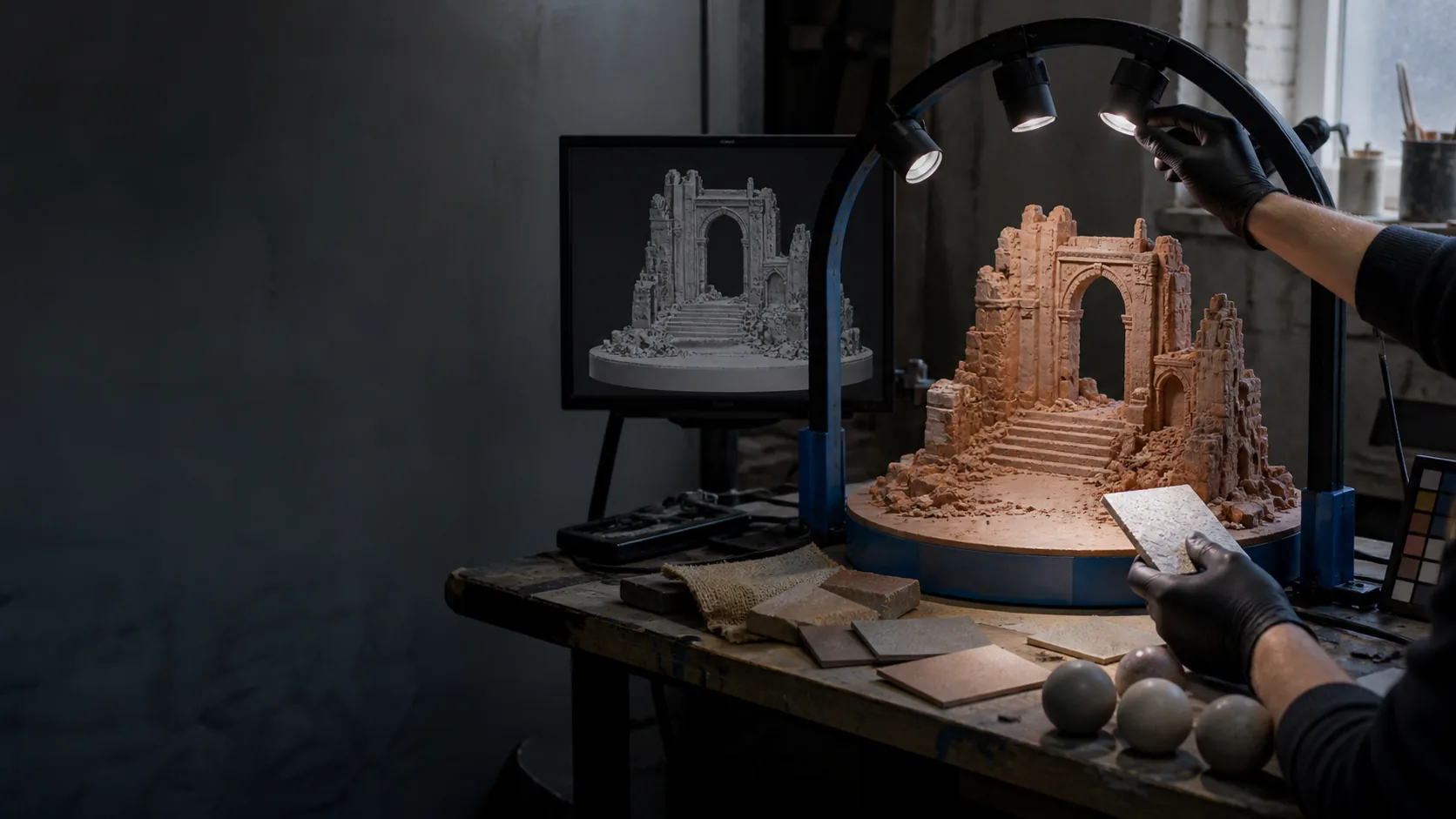
Material and lighting studyRepresentative editorial scene — not Kioto Gaming staff, premises or client work.
Engine-ready visual production
A repeatable path from visual target and source files to integrated assets that respect the build.
Discuss this scopeProduction question / 01
Game art production succeeds when a visual target can be repeated at the required scale inside the engine. The production system matters as much as the final frame: asset specifications, naming, materials, levels of detail, budgets, validation, versioning and integration all affect whether the work remains usable.
See how the scope is builtThe stream starts with references and constraints. Camera, content volume, reuse, target conditions, performance budgets and review language are clarified before a workflow is selected. A benchmark asset or scene can establish the quality bar and expose pipeline risk before the team commits to a larger batch.
Technical art connects authored assets to runtime behaviour. Depending on the existing build, that can involve materials, shaders, tools, rig or animation support, procedural workflows, validation or scene optimization. Responsibilities are verified during discovery rather than presented as universal capability claims.
Every delivery should be inspectable from source to scene. Export settings, dependencies, integration state and known exceptions travel with the assets. Reviews happen in the build whenever possible because composition, lighting, motion, memory and performance cannot be judged from source files alone.
The asset types and technical responsibilities follow the style, content plan, engine and performance conditions of the project.
References become a reviewable benchmark with asset assumptions, scene conditions, quality language and measurable technical limits for the work that follows.
A scoped stream can cover selected environment, character, prop, UI or concept needs. Exact disciplines, style and volume are confirmed before staffing or throughput is estimated.
Technical art support can reduce repeated manual work and protect runtime constraints. Tools are justified by production volume, edit frequency and the existing engine pipeline.
Assets are reviewed in representative scenes with dependencies, lighting, levels of detail, memory and performance conditions visible. Changes remain tied to the visual target.
A production quote needs more than asset counts. It should show the benchmark, pipeline and review capacity behind the volume.
The proposal identifies the representative asset or scene, expected variants, complexity bands and volume assumptions. Style references are translated into a review language that the visual owner can apply consistently.
Source applications, export, engine import, materials, dependencies, validation and target conditions are recorded. Memory, performance or scene limits are attached to the relevant asset types rather than left as a final optimization task.
The plan includes internal approval time, feedback rounds, exceptions and the route from source file to accepted scene. Ownership, licenses, editable files and custom tools are stated before the final delivery.
A usable art delivery includes the source, engine result and conventions required for the next batch.
The sequence protects the visual target while exposing cost and integration risk early.
Step 01
References, camera, content volume, target conditions, reuse, source requirements and review ownership are gathered into one brief.
Step 02
A representative asset or scene establishes quality, integration and effort before a larger batch is released into production.
Step 03
Naming, source structure, export, engine import, validation, review states and exceptions are made explicit for the people doing the work.
Step 04
Work moves through controlled batches. Visual review and technical checks happen in representative scenes rather than only in isolated viewers.
Step 05
The final sample is traced from source to runtime. Dependencies, known exceptions, optimization decisions and ownership are documented.
Volume becomes expensive when the visual bar, review path or runtime conditions remain open.
A mood board can support direction but cannot settle topology, material, animation, reuse or runtime decisions. A representative source-to-scene sample gives the team a shared bar.
More production capacity does not help if feedback arrives late or conflicts. Batch size and staffing need to match the visual owner and technical review time available.
An asset can look correct in an authoring tool and fail in the scene. Integration, dependencies, performance and exceptions remain part of acceptance.
A clear visual owner and timely in-engine review are as important as production capacity.
The right answers depend on style, pipeline and volume. These questions make a proposal reviewable.
A scope can cover selected 2D, 3D, UI, environment, character, prop, concept or technical art work when the required specialists and pipeline fit are verified. The proposal should name the exact disciplines rather than imply universal coverage.
It means more than a successful import. Naming, scale, pivots, materials, dependencies, levels of detail, collision, animation needs, memory and scene conditions must match the agreed project conventions.
Source ownership and delivery requirements should be written into the scope. The hand-off identifies working files, export settings, dependencies, licenses where relevant and any exception to the normal package.
A benchmark and a small representative batch provide better evidence than a rate based only on asset count. Complexity, review cycles, variants, integration, rework and internal approval capacity all affect throughput.
We will identify the benchmark, pipeline questions and first production batch needed for a responsible scope.