Forza 6 barn finds: how the new stamp-driven system works
Forza 6 barn finds return as a collectible car layer, but the unlock loop has been redesigned around a stamp-driven Collection Journal rather than the pure exploration loop that older Forza Horizon titles used. In Forza Horizon 6 the game ships with 15 barn finds scattered around the entire Japan map, and each one is gated by a stamp that you earn by completing the corresponding Discover Japan activity. The first time you understand that a barn is not a free roamable secret but a reward tied to a progression track, the rest of the loop starts to make more sense, and the question shifts from “where is it” to “which stamp do I need first.”
This guide focuses on the mechanical side of the system. It explains how the Collection Journal, stamps, and restore timers connect, what barn finds actually exist, how the Ohtani and Ito region cars are positioned on the map, how long the restoration queue takes, and what changes when a barn find finishes restoring. The same structure also matters if you are studying how open-world reward loops work, because Forza 6 barn finds are a useful case study in gated collectible design.
Because barn finds now tie to a structured activity track, the practical workflow for a player is short, but the design implications are wider. Each stamp category, each region, and each restore time is a deliberate knob that the team can tune, and the loop works only when players understand which knob affects which outcome.
What counts as a barn find in Forza Horizon 6
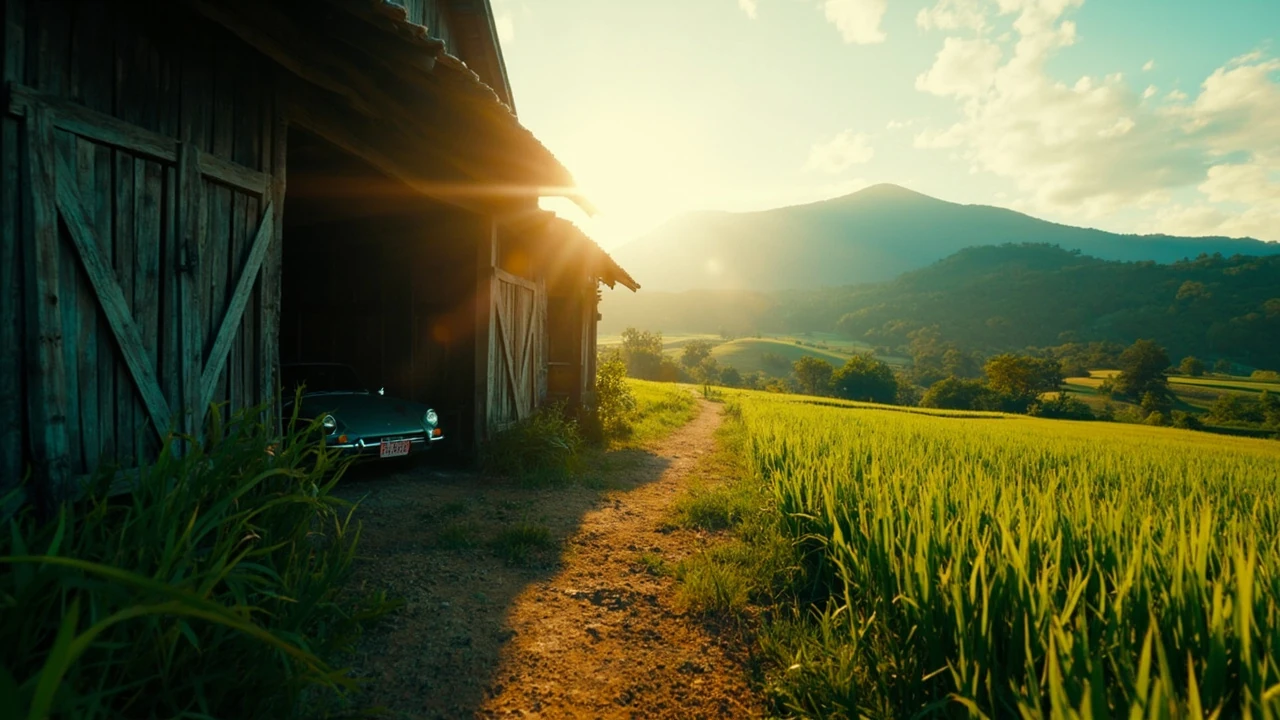
Barn finds are one of three collectible car categories in Forza Horizon 6, sitting alongside Treasure Cars and Aftermarket Cars. The defining traits of a barn find in this entry are: the car is hidden inside a barn-style building somewhere on the Japan map, the car must be discovered in person, and the car then enters a real-time restore queue before it can be driven. Unlike Treasure Cars, which are found in less hidden locations, or Aftermarket Cars, which are upgraded rather than restored, barn finds are the only category that introduces downtime between finding the car and driving it.
From a design perspective that downtime is the whole point. The Forza team uses the restore timer to spread a collectible loop over many play sessions, so a single stamp does not feel like a one-line reward. The timer also gives the game a natural reason to keep you coming back, because each completed barn find frees up attention for the next stamp category. When you read the official Barn Finds page on the wiki, the language around restore times is deliberately vague, noting that some cars take a few hours while others can take entire weeks, which is consistent with how the studio handles time-gated collectibles across the franchise.
If you are mapping the loop as a designer, the simplest mental model is: stamp category unlocks barn find, barn find is found on the map, barn find enters restore queue, restored car joins the garage. The two non-obvious steps are the stamp requirement at the front and the time gate at the back, and both are easy to miss if you only watch gameplay footage.
How stamps and the Collection Journal connect to barn finds
The Collection Journal is the activity layer that drives stamp progression. Instead of rewarding barn find discovery through a free-form search, the game rewards completion of Discover Japan activities within each category. When a category hits its stamp target, a new barn find becomes available to find on the map. Until that stamp appears, the barn is invisible to the player in a meaningful sense, even if the player has already driven past the location.
For an experienced player this changes the optimization problem. Rather than scanning every building in Japan, the practical question is which Discover Japan activities to clear first within the categories that gate the cars you want most. Categories tend to map to a region or a play style, so the early game ends up being a decision about which region of Japan to invest exploration time in, not which barn to chase first.
The wiki is explicit that you cannot get a barn find until you have unlocked the relevant stamp, which is the load-bearing rule. Everything else in the loop is downstream of that. The Collection Journal therefore behaves less like a checklist and more like a content scheduler, and the barn finds behave like the reward surface for that scheduler.
Stamp categories you will see in the Collection Journal
- Driving categories that reward drift, speed, or road-trip style activities
- Discovery categories that reward finding scenic or culturally significant spots
- Photography and showcase categories that reward creative mode usage
- Event and racing categories that reward competing in specific event types
- Cultural categories tied to visiting landmarks and Japanese regional content
The exact internal names change as the game patches, but the structure is what matters: each category has its own stamp counter, and the stamp counter has its own threshold for unlocking the next barn find. Treat the Collection Journal as the source of truth and treat the barns as the surface output.
How the restore queue and restore time windows work
Once a barn find is located, the car is added to the restore queue rather than the garage. Restore time is measured in real-world hours, not in-game time, so logging out does not pause it but also does not speed it up. The Barn Finds wiki page notes that some cars take just an hour or two to restore, while others can take entire weeks of real-life time, which means the queue is intentionally uneven and is meant to overlap with other play sessions.
That unevenness is the real design tool. A short restore, like the Honda 2005 NSX-R GT taking around an hour or two, keeps the early game loop tight, while longer restores create a backlog that encourages players to keep playing through other content rather than waiting at a barn. Because the timers are not synchronized, a player who finds several barns in a single session will end up with a staggered stream of restored cars arriving over the next days and weeks.
The important mechanical detail is that the timer starts when the car is found, not when the stamp is earned, and it is fixed at the time of discovery. There is no documented in-game way to accelerate the restore in the base system, so the only optimization is the order in which you visit barns. If a long restore is a featured car you care about, going to that barn earlier in your playthrough is the only meaningful knob the player controls.
Confirmed Forza 6 barn finds list and region placement
Forza Horizon 6 ships with 15 barn finds, and the Barn Finds page on IGN’s wiki lists confirmed cars with their starting region. The list below reflects the cars and regions confirmed on that page, with restore windows where the wiki currently states them, and it is the working list to plan a route around until the studio ships a full interactive map.
| Car | Region | Approximate location cue | Stated restore window |
|---|---|---|---|
| Honda 2005 NSX-R GT | Ohtani | Near the river that runs south, accessed from a curvy east road with two hairpin turns and a dirt path up the hill | About 1-2 hours |
| Ford Sierra 1987 Cosworth RS500 | Ito | Barn on the edge of the Ito region, accessed from the forest south of the road in the corner of the region | About 1-2 hours |
| Toyota 1969 2000GT | Ito | Confirmed in the Ito region; specific sub-area pending | Not stated on the wiki yet |
| Remaining 12 barn finds | Various regions across Japan | Pending full map and stamp data | Being updated as the studio confirms timings |
Two practical things follow from this table. First, both confirmed cars with stated restore times are short, which fits the pattern of using quick wins early to teach the system before the long restores start stacking up. Second, the placement of the NSX-R GT and Cosworth RS500 in Ohtani and Ito respectively means that the early game naturally funnels exploration through the south of the map, which is also where several of the more accessible Discover Japan activities live. That overlap is unlikely to be a coincidence.
For players, the practical implication is that the southern regions are an efficient first sweep. For designers, the implication is that the Forza team is using stamp location and barn location to gate the early exploration curve together, which is a tight integration between the activity layer and the collectible layer.
Honda 2026 NSX-R GT in Ohtani
The NSX-R GT sits in the Ohtani region near a river that runs south. The path in is described from a curvy east road that bends into two hairpin turns; from there a dirt path leads up the hill to the barn itself. The dirt-path entry is a hint about the road type that the game expects you to be on, because a normal tarmac route will not surface the turn-in. The restore window is short, on the order of one to two hours, which makes this a good first barn to verify the system end-to-end.
Ford Sierra 1987 Cosworth RS500 in Ito
The Cosworth RS500 sits at the edge of the Ito region. The approach runs through a forest south of the road in the corner of the region, which is a different terrain cue than the Ohtani river and dirt-hill approach. The restore window is also about one to two hours. Finding both short-window cars early is the fastest way to confirm that the stamp system is working as expected for your account.
Toyota 1969 2000GT in Ito
The 2000GT is confirmed in the Ito region, which immediately makes the southeast of the map a high-priority exploration zone. The wiki does not yet list a sub-area or a restore window for this car. Treat the 2000GT as a long-tail target until the studio updates the page, and use the early Ito activity clears to push the relevant stamp closer to unlocking it.
Reading the map: how barn placement interacts with the road network
One of the more useful design reads in Forza Horizon is that barn finds are never placed on a main highway. The Honda NSX-R GT sits behind a dirt path, the Cosworth RS500 sits off a forest road, and the standard pattern across the franchise is to use a back road, a service track, or a turnoff that the GPS will not naturally suggest. The wiki entries for the Ohtani and Ito cars follow that rule, with directions that start from a curvy secondary road rather than a highway exit.
For players, this means a main-road loop is not a viable strategy. The map needs to be approached with the assumption that barns sit one road class below the fastest path between two points. The fastest way to scan for them is therefore to drop down a tier on the road network and follow the secondary roads with the mini-map at a high zoom. The visual approach of sweeping the countryside at lower speeds is consistent with how the rest of the Collectible loop works in this series.
For designers, the road-class cue is a useful case study in how collectibles are made to feel found rather than handed to the player. The game never spawns a marker on the HUD for a barn, and the only navigation aid is the visual signature of the barn itself and the directional language on the wiki. That is a deliberate choice, because if barns were marked they would reduce the discoverability fantasy that the loop sells.
What you actually get when a barn find finishes restoring
When a barn find finishes restoring, the car moves from the restore queue into your garage as a drivable vehicle. The car is generally not customizable in the same way as cars bought from the autoshow, and the tune setup is locked until you put the car through the normal upgrade flow. Mechanically the car behaves like any other car in the garage from that point on, but it is permanently flagged as a barn-find vehicle in your collection menu, which is the only visual marker that the car came from this system.
That visual flag is meaningful inside the collectible layer, because the Barn Finds page is built to be a self-contained record of which cars you have completed and which you have not. The Forza team treats barn finds as a sub-list within the wider collection, and the fact that the sub-list exists as its own menu is a sign that it is meant to be tracked separately. If you are a completionist player, that menu is the only place where the loop ends.
If you are reading the system as a designer, the meaningful detail is that the car does not unlock any exclusive upgrade tree. The reward is ownership of the car itself, plus a small badge of completion. That makes the loop very pure: the satisfaction comes from the find and the wait, not from a long upgrade payoff afterward. A loop that relies on the act of finding rather than the post-reward progression is unusual in open-world games, and it is one of the reasons the Forza barn find mechanic has persisted across entries.
Common failure modes when chasing Forza 6 barn finds
The most common player failure is approaching barn finds as a free-form exploration loop. The stamp gate means that walking into a barn early will not surface the car, and the building will read as ordinary scenery. The wiki explicitly states that you cannot get a barn find until you have unlocked the relevant stamp, so the failure mode is not “you cannot find the barn” but “the barn has not been enabled for your account yet.” That distinction is important, because it changes the player’s job from exploring to clearing the right Collection Journal categories.
The second failure is assuming the restore queue is paused when offline. The wiki describes the restore in real-life time, and the standard pattern across the series is that the queue keeps running in real time. Logging out does not accelerate the restore, but logging in does not pause it either. Players who think they are saving time by logging out during a long restore are spending time on the same timer either way.
The third failure is treating the listed restore windows as exact. The wiki is explicit that the team is still confirming restore time windows for each barn find, and the early figures are best treated as ballpark numbers rather than commitments. A car listed as “a few hours” may be revised upward once the studio updates the page. The robust move is to plan around the order of barns, not the exact timer.
The fourth failure is the in-game sense that a barn find is missing. The wiki is also clear that the full map and instructions for every barn are still being updated. Chasing a barn that has not yet been documented in detail is a known rough edge, and the only safe move is to wait for the studio to confirm the location, the stamp, and the restore window before investing a long exploration run.
Designing a first sweep route across Ohtani and Ito
A practical first sweep for Forza 6 barn finds starts in Ohtani, then drops south into Ito. The NSX-R GT in Ohtani sits near a river bend with a dirt-hill entry, and the Cosworth RS500 in Ito sits at the regional edge near a forest access. The two routes share a south-of-center orientation, and both have short restore windows that make them ideal first-barn targets. The 2000GT is also confirmed for Ito, which makes the entire Ito region a high-yield exploration area once the relevant stamp is unlocked.
For a player, the route plan is straightforward: clear the Ohtani and Ito Discover Japan activities until the relevant stamps unlock, then drive the secondary road network in each region with the mini-map at a high zoom. The map is large enough that trying to cover the whole of Japan in one session is wasteful, because the early stamps will not enable the northern barns. A focused southern sweep is faster and gives the restore queue two short timers to work with before the long-tail barns start to come online.
For a designer, the Ohtani and Ito pairing is a useful study in how a studio can use the early map to teach a multi-stage loop without ever prompting the player. The first two barns both teach the same lesson, which is “clear a stamp category, then find a barn, then wait for the restore,” and they do it in a tight enough region that a player will hit both within a few sessions. The lesson is reinforced by the short restore window, which means the player gets to see the loop complete end-to-end within hours of finding the first barn.
How Forza 6 barn finds compare to older Horizon entries
Barn finds have been a franchise feature since Forza Horizon, but the loop has shifted in two ways. The most visible change in Forza Horizon 6 is the stamp requirement, which gates the barn find behind a Collection Journal activity rather than the older model where the barn was free to find from the start. The second change is the restore queue, which is longer and more varied than in earlier entries and is meant to overlap with multiple play sessions rather than deliver a single-session reward.
The older Forza Horizon titles treated barn finds as a static map layer, and players could in theory find every barn in a single focused session if they knew the map. The current entry treats the barn find as a reward surface, which is a meaningful design shift. The Collectible category is now a sequenced system rather than a static checklist, and the order in which a player can clear barns is bounded by the order in which they can clear stamps. That makes the system more like a battle pass than a treasure hunt, even though the surface language of barns and hidden cars is the same.
If you are using Forza Horizon 6 as a reference for your own collectible loop, the lesson is that a stamp gate is a powerful pacing tool. It lets the design team ship a small number of high-quality barn finds without overwhelming the player, because only a subset is available at any time. The same gating logic works in any open-world system that needs to spread collectible rewards across a long play arc.
What to track in your own Collection Journal
Because the stamp categories are the gate, a simple tracker is more useful than a map route. For each stamp category in your Collection Journal, write down how many stamps you have, what the unlock threshold is for the next barn, and which Discover Japan activity the category tracks. When a category hits its threshold, the relevant barn will become findable, and the order in which you clear the categories will determine the order in which you can chase the barns.
The practical version of this tracker is a small table. Keep one row per category, one column for the current stamp count, one column for the next barn, and one column for the restore window once the barn is found. That table is also useful when the wiki is incomplete, because the next-barn column is the missing piece of information that you can fill in by reading the in-game stamp target.
| Collection Journal category | Current stamp count | Next barn find when threshold is met | Region of that barn | Restore window (once found) |
|---|---|---|---|---|
| Driving category 1 | Player tracks | Pending wiki update | Pending wiki update | Pending wiki update |
| Driving category 2 | Player tracks | Pending wiki update | Pending wiki update | Pending wiki update |
| Discovery category | Player tracks | Pending wiki update | Pending wiki update | Pending wiki update |
| Photography category | Player tracks | Pending wiki update | Pending wiki update | Pending wiki update |
| Event category | Player tracks | Pending wiki update | Pending wiki update | Pending wiki update |
Used consistently, this table gives you the same information that a fully updated wiki page would, and it costs nothing to maintain. The point is not to be a database, it is to be able to answer “what is the next barn I can actually chase” without leaving the game.
Frequently asked questions
How many barn finds are in Forza Horizon 6?
Forza Horizon 6 ships with 15 barn finds in total, scattered across the entire Japan map. The full list is still being updated on the Barn Finds wiki, and the studio has confirmed that the page will be expanded as each location, stamp requirement, and restore window is verified.
Why can I not find a barn even though I have driven past it?
Barn finds are gated by Collection Journal stamps, so the barn is not actually available until the relevant stamp is earned. If you have not cleared enough of the activities in the right category, the building will not surface a barn find for your account even if you are standing at the door. Clear the matching Discover Japan activities and try again.
Do barn finds restore in real time or in-game time?
Restore time is measured in real-life hours, not in-game time. Logging out does not pause the timer, and logging back in does not accelerate it. The only meaningful player lever is the order in which you visit the barns, because each car has its own fixed restore window that starts when the car is found.
How long does the Honda NSX-R GT take to restore?
The Honda 2005 NSX-R GT, which sits in the Ohtani region near a southern river and a dirt-hill path, takes about an hour or two of real-life time to restore. The wiki is explicit that the team is still updating restore windows, so treat the figure as a working estimate rather than a guarantee.
How long does the Ford Sierra Cosworth RS500 take to restore?
The Ford Sierra 1987 Cosworth RS500, which sits on the edge of the Ito region near a forest access, also takes about an hour or two of real-life time to restore. Both early-game cars share the short restore window, which is useful for verifying that the loop is working as expected on your account.
Where is the Toyota 2000GT barn find?
The Toyota 1969 2000GT is confirmed in the Ito region. The wiki has not yet published a sub-area, a stamp requirement, or a restore window for this car, so treat it as a long-tail target until the studio updates the page. The 2000GT is a priority target for any player working through the Ito stamp categories.
Can you speed up a barn find restore in Forza Horizon 6?
There is no documented in-game mechanic to accelerate a barn find restore in Forza Horizon 6. The restore queue runs in real time, and the only optimization is the order in which you visit the barns. If a long restore car is a priority, finding that barn earlier in your playthrough is the only meaningful player-controlled variable.
Are barn finds different from Treasure Cars and Aftermarket Cars?
Yes. Treasure Cars are collectibles found in less hidden locations, Aftermarket Cars are upgraded rather than restored, and barn finds are the only category that introduces a real-time restore gate between finding the car and driving it. Each of the three categories has its own menu and its own completion list, so they are tracked separately in the collection layer.
Do barn finds grant any exclusive upgrades?
Barn finds do not grant an exclusive upgrade tree. The reward is the car itself plus a permanent flag in the collection menu that marks it as a barn-find vehicle. The car can be tuned and upgraded through the standard garage flow once it is restored, but the barn find does not add a special upgrade path on top of the normal one.
Where can I find a full barn find map?
The Barn Finds wiki page is the working source for the full map and the per-barn instructions, and the studio has stated that the page is being updated as locations and restore windows are confirmed. Until the page is complete, the safe approach is to focus on the confirmed Ohtani and Ito barns and use the Collection Journal stamps to sequence the rest of the loop.
Forza 6 barn finds are a tight, stamp-driven collectible loop, and the cleanest way to read the system is to separate the three layers. The Collection Journal decides when each barn is available, the map decides where the barn sits, and the restore queue decides when the car actually becomes drivable. The Honda NSX-R GT in Ohtani and the Ford Cosworth RS500 in Ito are the two confirmed short-restore barns, the Toyota 2000GT is confirmed for Ito without a sub-area yet, and the remaining 12 barns are still being documented. Working through the Ohtani and Ito stamp categories first is the most efficient first sweep, and the restore queue will keep delivering cars over the next days and weeks even when you are not actively chasing the next barn. That is the shape of the loop, and it is the loop that the rest of the Forza Horizon 6 collectible layer is layered on top of.
Internal reading: if you are mapping the open-world design pattern, pair this page with the Elden Ring map design lessons article for a wider view of how collectible placement interacts with road network and traversal pacing.